Smoke and Ash Damage Assessment: What a Professional Evaluation Covers After a North Bay Fire
Category: Fire Damage
After a fire - or weeks of wildfire smoke - the visible damage is only part of the story. What a professional smoke and ash assessment actually covers, why it matters for your insurance claim, and how the findings drive the restoration plan.
After a fire in a North Bay home - whether a structure fire in the kitchen or weeks of wildfire smoke pressing against the windows - the first professional document in the recovery is the assessment. It is also the most consequential. The assessment defines what is damaged, how badly, what can be cleaned versus what must be replaced, and what the restoration will cost. It is the document the insurance adjuster works from, the scope the contractor builds to, and the baseline every later question gets measured against. A thorough assessment makes everything downstream faster and more accurate; a superficial one produces change orders, disputes, and a house that still smells like smoke a year later.
Homeowners are often surprised by how much territory a proper smoke and ash assessment covers - because smoke is not polite about staying where the fire was. Here is what a professional evaluation actually includes, and why each piece matters.
Smoke Travels: The Whole-House Reality
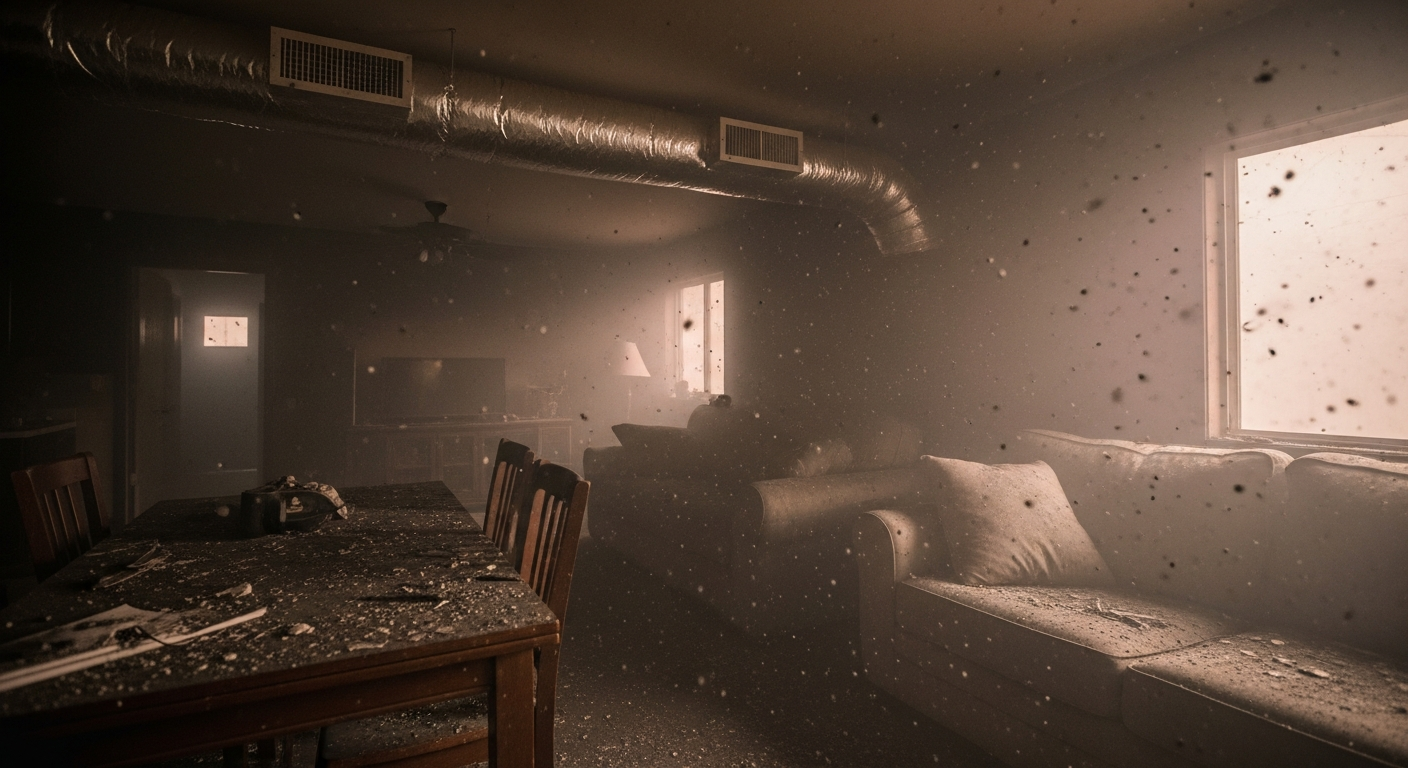
The defining fact of smoke damage is migration. Heat and pressure from a fire drive smoke through every available pathway - open doors, gaps around plumbing and wiring, HVAC ductwork, and the hidden chases inside walls - until it has reached essentially every room in the structure. A fire contained to one room routinely leaves measurable smoke residue throughout the house. The residues themselves vary: hot, fast fires produce dry, powdery soot that cleans relatively easily; slow, smoldering fires produce wet, oily residues that smear and penetrate; protein fires - the classic kitchen event - produce a nearly invisible but viciously odorous film that coats everything.
The assessment maps this. Room by room, the technician documents residue type and severity on every surface category - ceilings, walls, floors, contents - and notes the hidden reservoirs: inside cabinets and closets, behind wall hangings, in attic spaces, and inside the HVAC system itself. The pattern of deposits tells the story of how the smoke moved, which tells the restoration team where the work is. An assessment that covers only the burned room is not an assessment; it is a guess with a clipboard.
The Structural Evaluation
Where fire or heat touched the structure, the assessment turns forensic. Char depth on framing members tells an experienced evaluator whether a stud has lost structural capacity or needs only cleaning and sealing. Heat damage is subtler: wood that never charred can lose strength from sustained high temperatures, steel connectors can be compromised, and concrete can spall and weaken in ways that are not visible to the eye. Roofing, windows, and exterior surfaces get evaluated for heat and ember damage that the homeowner may never have noticed.
In wildfire events specifically, the structural evaluation extends to the perimeter: heat-stressed siding, compromised window seals, ember entry points at vents and eaves, and the condition of decks and fences that can carry fire to the structure in the next event. The assessment that documents these items is doing double duty - defining the current restoration scope and flagging the vulnerabilities worth fixing while the work is already underway.
HVAC: The Distribution System Nobody Sees
The heating and cooling system deserves its own section because it is the most commonly missed scope item and the most common reason smoke odor persists after an otherwise complete restoration. If the system ran during or after the fire - or if the home sat closed up with smoke present - the ductwork, blower, coils, and filter housing are all contaminated, and every future cycle redistributes residue through the house. The assessment opens the system: inspecting duct interiors, evaluating whether flex duct is cleanable or must be replaced, checking the air handler, and determining whether the system needs cleaning, sealing, or component replacement. Skipping this evaluation is the single most reliable way to guarantee the smell comes back.
Contents and the Restore-Versus-Replace Map
The contents portion of the assessment is the triage that determines the pack-out: what is restorable, what is questionable, and what is a total loss. Room by room, items are categorized and documented with photographs - the restore list that drives the contents cleaning scope, and the total-loss list that drives the personal-property claim. Experienced assessors know the non-obvious categories: medications and food exposed to smoke are automatic disposals, cosmetics and toiletries often are too, and children's items get the most conservative treatment of all. The assessment is also where the family learns the good news - the items they assumed were lost that professional contents restoration can actually save.
Ash Is Its Own Hazard
Ash deserves separate attention because it is chemically aggressive in ways smoke is not. Wildfire and structure ash is alkaline and caustic; on vehicles, it etches paint within days when mixed with morning dew. On roofing and gutters, it accelerates corrosion. Indoors, fine ash infiltrates through the same pathways as smoke and adds a gritty, abrasive contamination layer that damages finishes if wiped improperly. Ash also carries a respiratory hazard - it is not material to dry-dust or blow around, which is why professional cleanup uses HEPA-filtered equipment and wet methods. The assessment documents ash deposition patterns because they inform both the cleaning scope and the health precautions for anyone entering the property before cleanup.
Testing and the Documentation Package
A rigorous assessment quantifies where it can. Surface sampling can confirm the presence and type of combustion residues, which matters when smoke exposure is disputed - a common scenario after wildfire events when the insurance question is whether the smoke damage is real and claim-worthy. Air quality sampling documents particulate and VOC levels, which matters for re-occupancy decisions and for families with respiratory sensitivities. The final package - photographs, room-by-room findings, residue mapping, testing results, and the recommended scope - is the claim document, the work order, and the before-picture for verification all in one.
The insurance dimension cannot be overstated. Adjusters work from documentation, and the professionally assembled assessment is the difference between a claim that proceeds on evidence and one that proceeds on argument. In the North Bay's post-fire environment, where adjusters handle enormous caseloads, the claims with complete professional assessments move first and settle most completely.
Wildfire Smoke Events: The Assessment Most People Skip
The North Bay's most common smoke event is not a structure fire at all - it is the multi-week wildfire smoke siege that infiltrates homes across the county. Homeowners under-assess these events because nothing burned and nothing looks damaged. The professional assessment after sustained smoke exposure checks the reservoirs that matter: attic insulation, which acts as a giant filter and holds smoke for years; the HVAC system; soft goods and upholstery; and the hidden surfaces behind furniture and inside closets. For homes within the smoke footprint of the 2017, 2019, and 2020 fire complexes, this assessment is also the route to an insurance claim many owners never knew they could file - smoke damage from wildfire is a covered peril under most homeowner policies.
The Timeline: Why Assessment Comes Before Any Cleaning
The single most damaging mistake after a fire is premature cleaning. Families wipe down walls, launder curtains, and run the vacuum - and in doing so they smear oily residues into surfaces, set odors permanently, and destroy the documentation the insurance claim needs. The correct sequence is fixed: assessment first, then stabilization and board-up if needed, then the restoration plan, then execution. The assessment has to capture conditions as they were found, because that record is the claim. Even well-meaning cleanup before documentation can cost thousands in disputed claim items. When in doubt, photograph everything, touch nothing, and make the call.
What the Assessment Means for Your Family's Health
For families deciding when - or whether - to sleep in the house again, the assessment is the decision document. Post-fire environments carry particulates, VOCs, and residue chemistry that are genuinely unhealthy to breathe, especially for children, the elderly, and anyone with asthma or respiratory conditions. The evaluation's air-quality findings and residue mapping answer the practical questions: which rooms are safe to enter for short periods, whether the home is habitable during restoration, and what clearance criteria will confirm it is safe to return. Guessing at habitability after a smoke event is not thrift - it is exposure. The assessment converts the question from anxiety into data.
Questions Your Assessment Should Answer in Writing
When the assessment is complete, you should hold a document - not a verbal summary - that answers specific questions. Which rooms and systems show residue, and of what type? What is the HVAC disposition - clean, seal, or replace? What contents are restorable, and what is the documented total-loss list? Are there structural concerns requiring an engineer or specialist? What testing was performed and what did it show? What is the recommended scope and sequence? And what are the habitability findings for the period before and during work? If any of these answers are missing, ask for them. The assessment is the foundation the entire recovery stands on, and foundations are not the place for vague.
The Emotional Side of the Walk-Through
One thing experienced assessors understand that the paperwork does not capture: the first walk-through is usually the family's first real look at the damage, and it lands hard. A good assessor moves at the family's pace, explains what they are seeing in plain language, separates the frightening from the routine, and gives the honest verdict on the items people care about most. Fire recovery is a long road, and the assessment is where families learn whether the professionals beside them see a house or a home. That distinction tends to predict how the rest of the project goes.
Cost Considerations in 2026
The assessment itself is typically the least expensive line in the entire recovery - many restoration contractors, including us, provide initial damage assessments as part of the response process, with formal testing billed separately when sampling is warranted. The expensive version is the assessment not done: scopes that miss the HVAC system, contents lists assembled from memory months later, and structural questions discovered after the rebuild has begun. In 2026, with construction costs where they are, an accurate assessment is the only reliable protection against the change-order spiral that turns a restoration into an ordeal. Insurance generally covers reasonable assessment and testing costs within the claim, and the documentation returns its cost many times over in settlement accuracy.
Re-Assessment After Restoration: Closing the Loop
The assessment's final role comes at the end of the project. Post-restoration verification - visual inspection against the original residue map, air quality re-testing where it was performed at baseline, and the family's own walkthrough - confirms the scope was fully executed and provides the closure documentation for the insurance file and any future sale of the home. The before-and-after pair of documents is the complete story of the loss and the recovery. In the North Bay market, where buyers routinely ask about fire history, that pair of documents is worth real money at resale: the loss happened, the assessment defined it, the restoration addressed all of it, and here is the proof.
Why Choose NBE for Smoke and Ash Assessment in the North Bay
At NBE Property Restoration, assessments are how we start every job - because we have seen too many homes where someone else's shortcut became the homeowner's lingering problem. Our evaluations cover the whole house, the hidden reservoirs, the HVAC system, the contents, and the structural questions, with testing where the situation calls for it and documentation built for the insurance process from the first photograph. We know North Bay smoke - structure fires, wildfire sieges, and the residue patterns each one leaves.
If your home has experienced a fire or sustained smoke exposure anywhere in Santa Rosa, Sonoma County, Napa, or Marin, call us for an assessment before you clean, before you paint, and before you assume the damage is only what you can see. The right first document makes the whole recovery shorter, and the right team makes it a great deal less overwhelming.